Humans and the sea from Romanticism to the Anthropocene. An environmental history of Baltic Sea tourism (completed 2025)
a research project by Jan-Hinnerk Antons
The emergence of Baltic Sea tourism around 1800 can be attributed to a fundamental shift in the relationship between humans and the sea. Through scientific, medical and romantic discourse, the sea transformed from something threatening into a place of relaxation for body and soul. The Baltic Sea coast became a place of longing.

In this project, I examine the history of Baltic Sea tourism in the 19th and 20th centuries through the prism of human-sea relations. It is thus an environmental history that is primarily culturalist and only secondarily materialist in nature. The core thesis of the work is that the environmental discourses that dominated the entire Baltic Sea region from around 1970 onwards threatened to reverse what had developed in the first half of the 19th century: the conception of the Baltic Sea as a place of physical and mental healing through contact with nature. Of course, these discourses did not arise out of the blue, but were based on ecological damage to the Baltic Sea ecosystem that had been identified by alarmed scientists. To examine the direct effects of the respective ecological problems on tourism is part of the project. The work then analyses how societies around the Baltic Sea reacted to the ecological crisis, how they interacted in the process and thus constituted the Baltic Sea region as a space of communication. In the analyses national spaces are less compared than intertwined, because international cooperation plays just as much a role here as transregional entanglement, knowledge and cultural transfer.
Tourism is fundamentally understood as an expression of a modern need for distance from everyday life, role variation and new experiences of the body and nature, which can be read both as a reaction by individuals to the functional differentiation of society and as a reaction to discourses about unease with modernity.
From this perspective, my research project examines the changes in the relationship between humans and the sea in terms of their impact on Baltic Sea tourism and, conversely, the influence of tourism on the relationship between humans and the sea. Broadly speaking, in the first part I trace the establishment of the Baltic Sea coast as a recreational area and place of longing, and the further development of tourism, including its social expansion in the 19th century. The second part focuses on new concepts and practices of body and nature experiences during the era of high modernism, such as nudism, sports and camping, and outlines a Scandinavian Sonderweg in tourism based on summer house culture and friluftsliv.

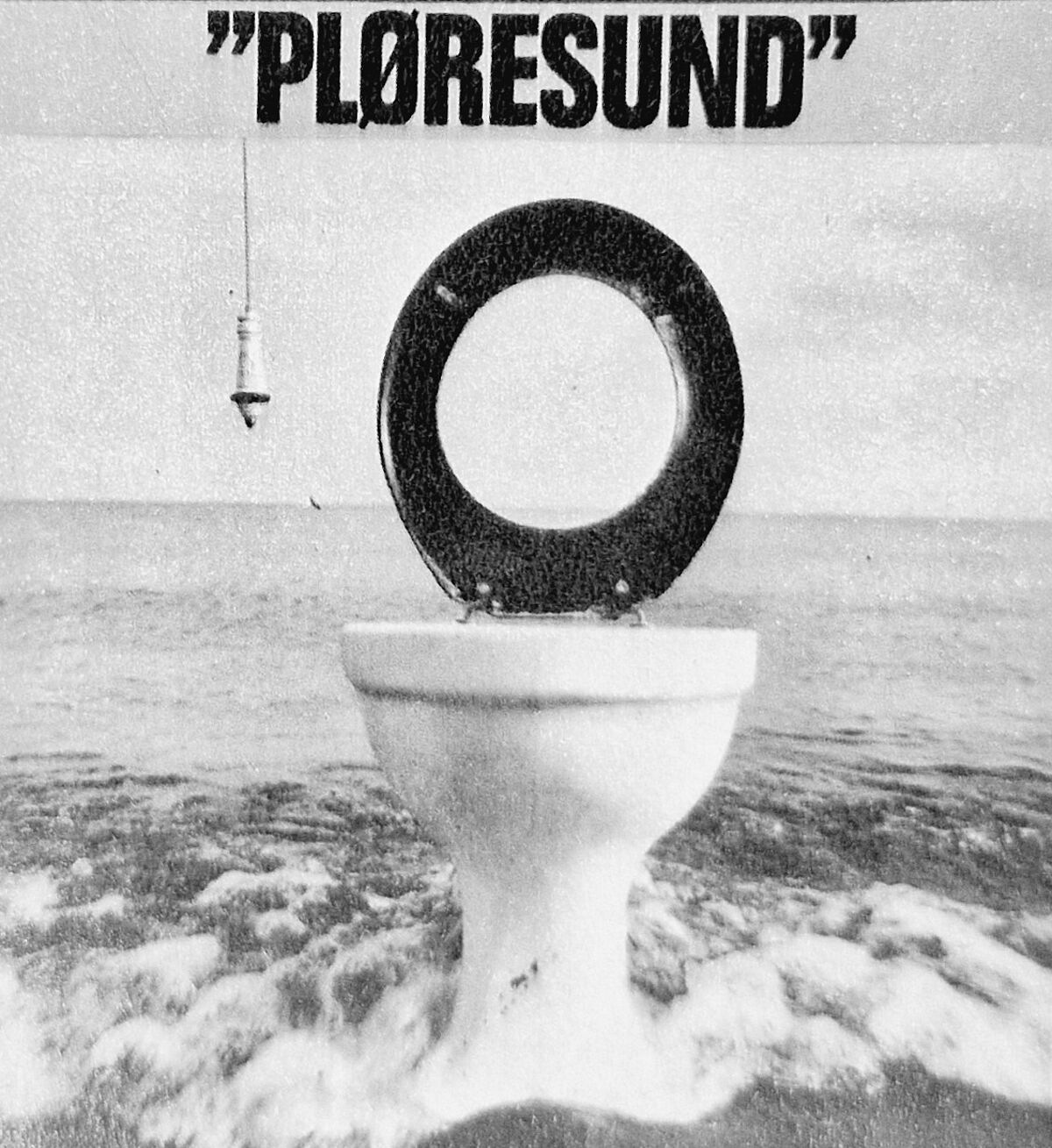
Finally, the third part analyses new discourses in Baltic Sea tourism in the Anthropocene. From 1970 onwards, the image of the Baltic Sea as "the dirtiest sea in the world" [Spiegel cover image] threatened the most important foundations of tourism. Swimming was now considered a potential health hazard, and the image of a sewer poisoned the idea of the sea as a "mirror of the soul". How did tourists, the tourism industry, politicians and civil society respond to these challenges?
In order to reveal specific features, discontinuities and continuities, a longue durée perspective and a broad geographical scope have been chosen: From the emergence of the first Baltic Sea resort, Heiligendamm, in 1794, to the end of systemic rivalry in Europe in the early 1990s; from Sopot and Travemünde in the south to Terijoki (Zelenogorsk) near St. Petersburg in the east, Mariehamn on the Åland Islands in the north and Skagen in the west.
Due to insufficient existing research and fundamental considerations, the macro perspective must necessarily be interrupted by zooming in on the micro perspective. This is because linking both levels promises to avoid excessive focus on structures and enable empirical foundation. Thinking in terms of national spaces, which could at best be conceived as a comparative analysis based on the topic, is deliberately exceeded and undercut here. Regional and transnational approaches offer a more plausible framework for doing justice to the phenomenon of Baltic Sea tourism.
